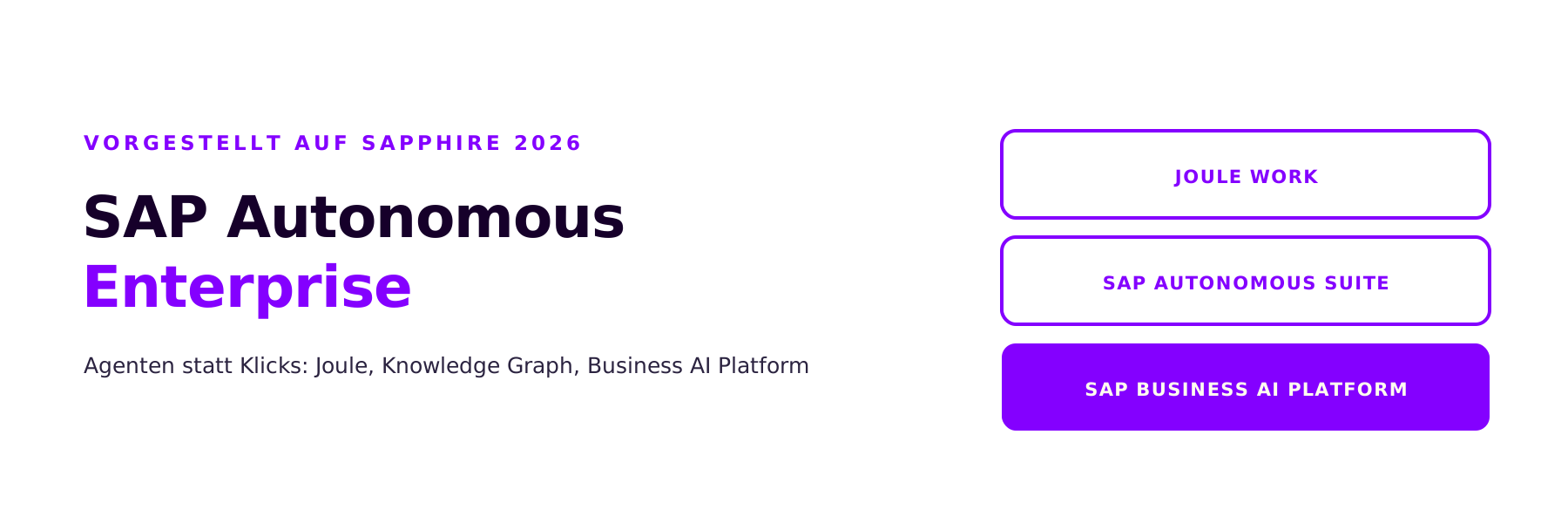
At Sapphire 2026 SAP unveiled the Autonomous Enterprise: AI agents that carry out tasks in the SAP system on their own. This post explains in plain terms how it is built, what the switch requires and what it costs, and where the ORAI Agent is the more practical alternative for older systems.

Checking invoices, approving orders, closing the books at month end: in many companies people still do these steps by hand in the SAP system. SAP's question for 2026 is: which of them can software handle on its own?
At its in-house event Sapphire 2026, SAP gave this a name, the Autonomous Enterprise, meaning the self-running company. It refers to AI agents, software that does not just suggest tasks but carries it out. People only check the cases that need a decision. What is new is not the idea, but the technical foundation SAP has built for it. On top of that comes a pricing model that is very cheap through the end of 2026, but still open for the time after that.
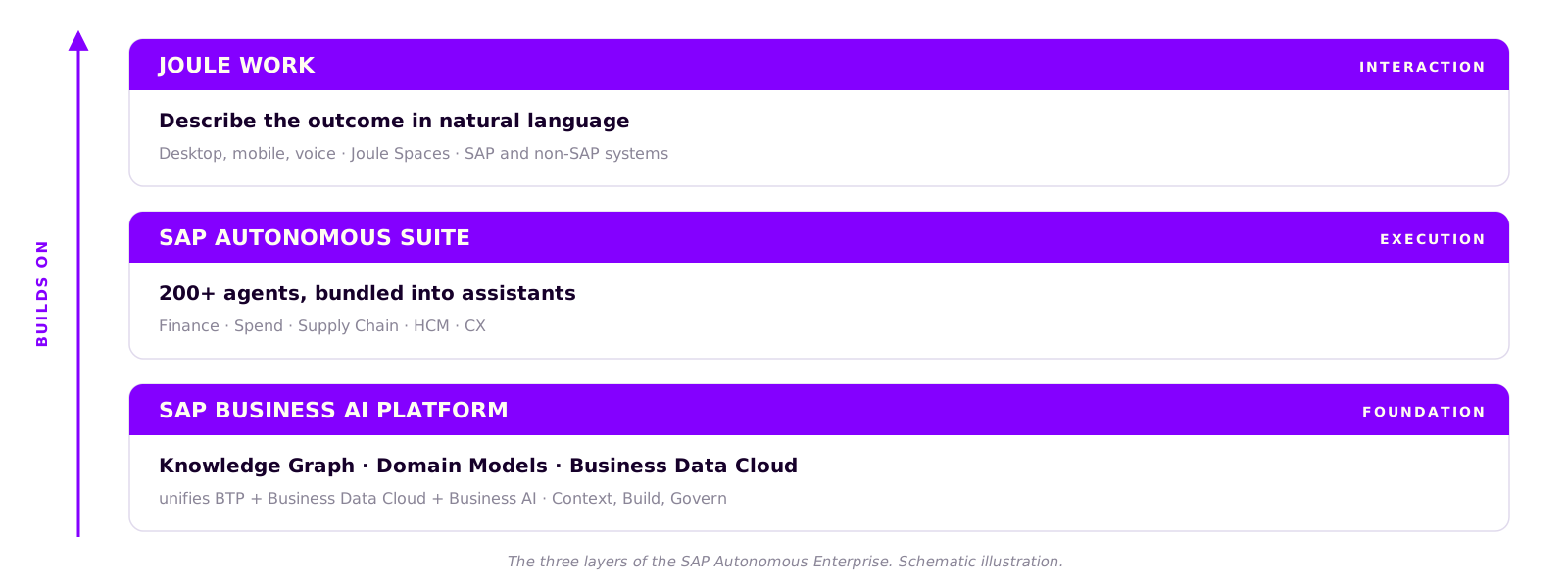
SAP arranges the whole thing in three layers that build on each other.
The data foundation (SAP Business AI Platform). SAP combines three previously separate parts into one platform: the development environment Business Technology Platform, the data store Business Data Cloud and its existing AI functions. This platform gives the agents the data and rules they work with.
The execution (SAP Autonomous Suite). On top run more than 200 specialized agents, bundled into assistants for individual departments such as finance, purchasing, supply chain, HR and sales. One example is an assistant for the month-end close, which SAP says shortens it from several weeks to a few days.
The operation (Joule Work). Joule is SAP's AI assistant. It turns from a chat window into the actual working surface. You write in plain language what you want to achieve, and the system assembles the right workflows and agents itself, across different systems too.
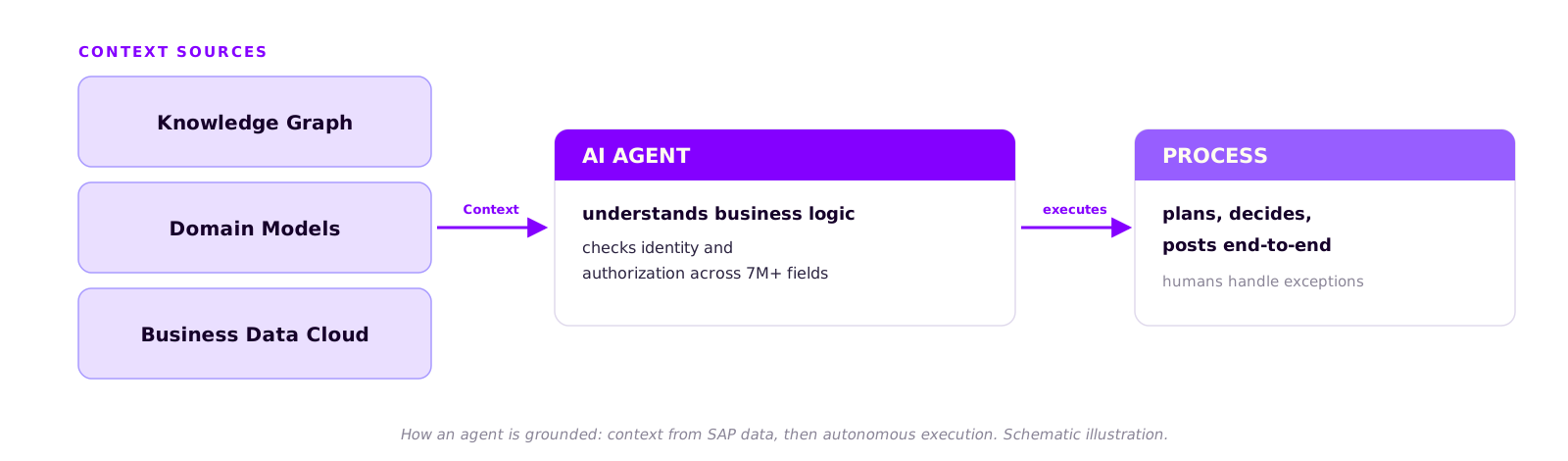
SAP's strongest argument is its own data. The SAP Knowledge Graph is a kind of map that shows how business objects, processes and responsibilities in the system are connected. With it, the agents find their way through thousands of processes and more than seven million data fields, and they check who is allowed to see what. On top come AI models that SAP trained on its own program code, and the Business Data Cloud, which brings data from SAP and from other systems into one place. The point: no other provider knows the processes and data inside the SAP system as precisely as SAP itself.
Companies build their own agents in Joule Studio. There they describe their goal, and the tool creates specifications, technical descriptions and a first draft of the code from it. A Sony representative said on stage that a solution which normally takes three to four days was built this way in 10 to 15 minutes.
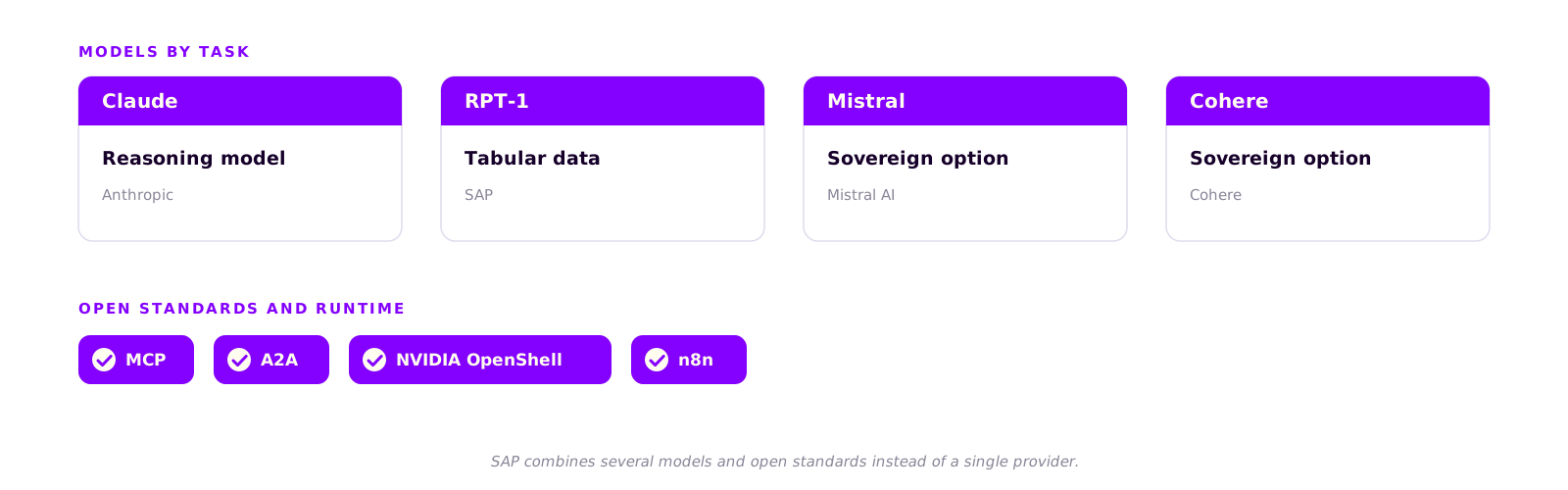
For the underlying AI, SAP uses several providers: Claude from Anthropic as the main model for reasoning, plus an SAP model for table data and Mistral and Cohere as European alternatives. Open connection standards like MCP and A2A are part of it too. Through them, different AI agents can communicate with each other.
For the automation to work, the data has to be clean and in the cloud. SAP requires a so-called Clean Core, an SAP system without tangled custom coding, run as S/4HANA Cloud, plus the Business Data Cloud. Through the program RISE with SAP, customers start with three assistants in the first year; through SAP GROW, with more than 20 assistants from the start. Older systems, such as S/4HANA in your own data center or the predecessor system ECC, get only selected functions, and only if the customer commits to moving to the cloud. New is a tool that SAP says speeds up this move by more than 35 percent.
Just as important, and SAP CEO Christian Klein stresses this too: the switch is not purely a technical project. Processes have to be rethought and staff have to be trained.
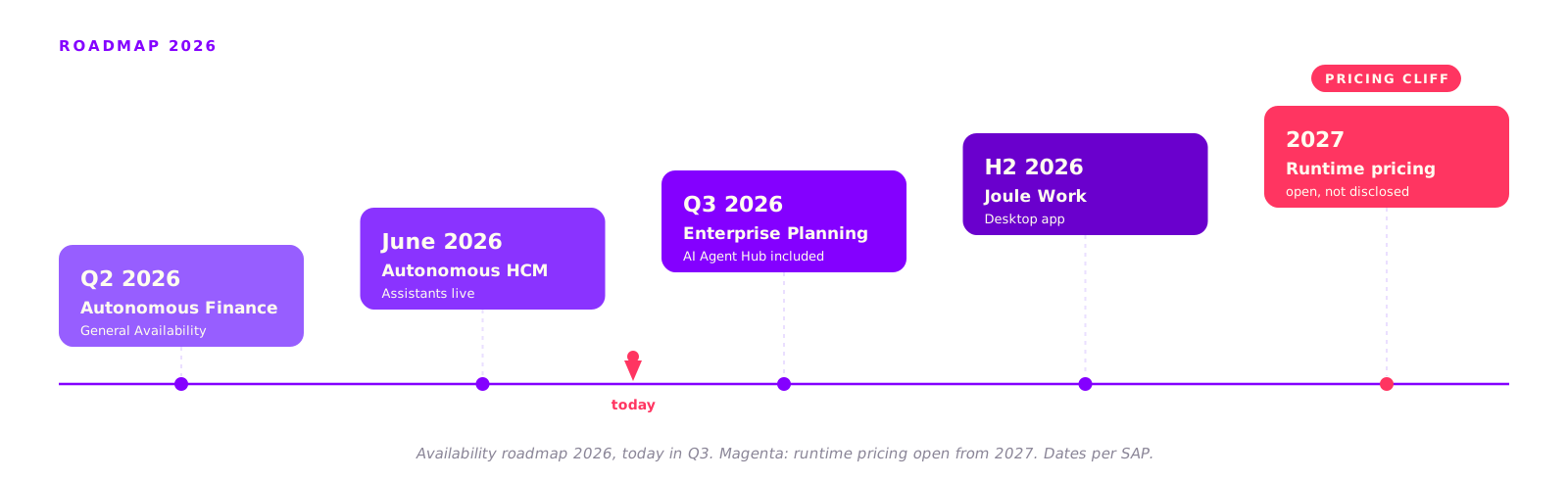
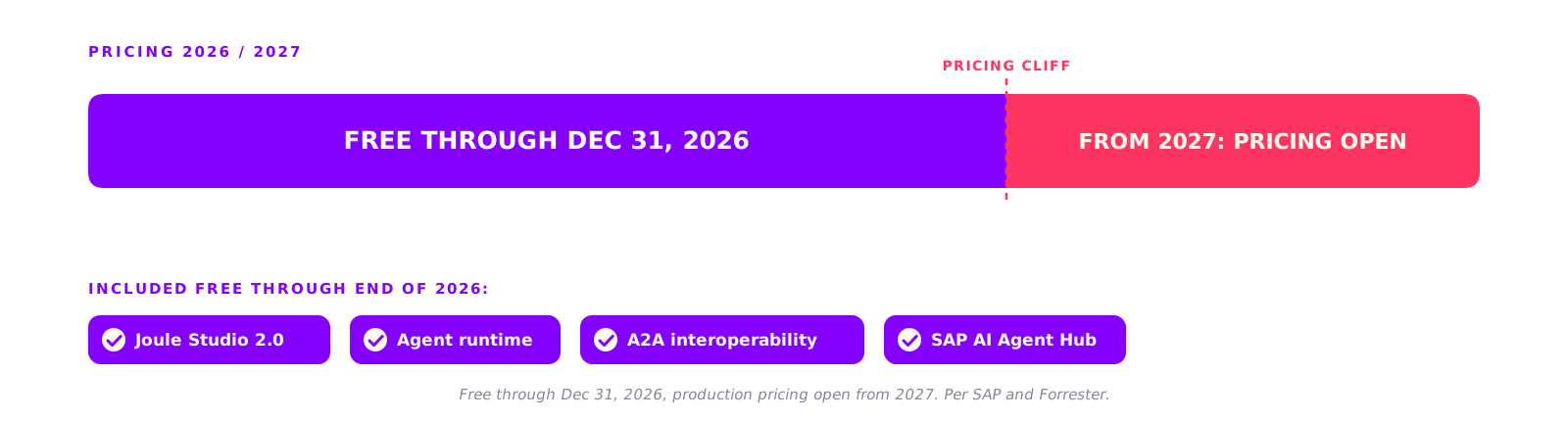
On price, a sober look pays off, because there are no firm figures yet. Through December 31, 2026, Joule Studio, running the agents in development and the A2A connection function are free, as is the central administration of the agents. That is a very cheap way to start. The catch: SAP has not said what productive use will cost from 2027. In most 2026 budgets, this item is therefore missing.
There is also the question of dependency. The more a company relies on the SAP platform and a single AI model, the harder a later switch becomes. The analyst firm Forrester sees this as a risk, especially in heavily regulated industries, that can become a management-level question within two years. To be fair: the announcement is not just theory. The major bank JPMorganChase confirmed on stage that it is moving its central accounting to the new SAP system.
The vision is strong, but not every company can or wants to go this whole way. For those cases we built the ORAI Agent, as a practical and independent alternative. Four points matter to us, and they hold up to a factual check.
Faster to set up, also with older systems. The ORAI Agent connects to SAP through the standard interfaces OData and RFC. These are normal access paths that SAP already provides. It also works with the older ECC system and with grown systems that are not yet cleaned up, and it needs neither the BTP platform nor extra programming inside SAP. If you are not in the cloud yet, you can still start within a few weeks instead of finishing a long migration project first.
Run the AI model yourself. With the ORAI Agent you choose and run the AI model yourself, in your own environment and with the provider or an open model of your choice. You are not tied to the models preselected by SAP, and you pay no surcharge for running it through the SAP platform.
Predictable already today. For the time after 2026, SAP has not named any prices yet. With the ORAI Agent you already know your costs and can plan with certainty.
Connect other systems without extra effort. SAP can include data from other systems through the Business Data Cloud, but the data has to be prepared and modeled first. The ORAI Agent talks to systems like Microsoft 365, Salesforce or Jira directly, without that intermediate step. The path from question to answer across several systems is simpler and cheaper.
| Criterion | ORAI Agent | SAP Autonomous Enterprise |
|---|---|---|
| Setup and prerequisites | Through the standard interfaces OData and RFC, works with ECC and not-yet-cleaned systems, no BTP | Requires a cleaned-up system (Clean Core), S/4HANA Cloud and Business Data Cloud |
| AI model | Run yourself, free choice of provider or open models, no surcharge via the SAP platform | Choice among the models provided and run by SAP |
| Ongoing AI cost (tokens) | Model cost paid directly to the provider or run locally, no SAP surcharge | Usage billed through SAP, with a surcharge on top of the token cost |
| Cost planning | Costs known already today | Prices for the time after 2026 not named yet |
| Connecting other systems | Directly, without data preparation | Through the Business Data Cloud, with prior data preparation |
The Autonomous Enterprise is an ambitious plan and reaches deep into the core SAP processes. The ORAI Agent is the path for everyone who wants AI results today, without having to switch to the public cloud, may still be on an older release, and wants full control over their AI model and costs. Both paths can exist side by side.
Book a call
We look at your starting point, meaning your release level, cloud plans and AI goals, and give you a clear recommendation: Autonomous Enterprise, ORAI Agent, or both side by side.
Send us a note or book a short meeting.
