
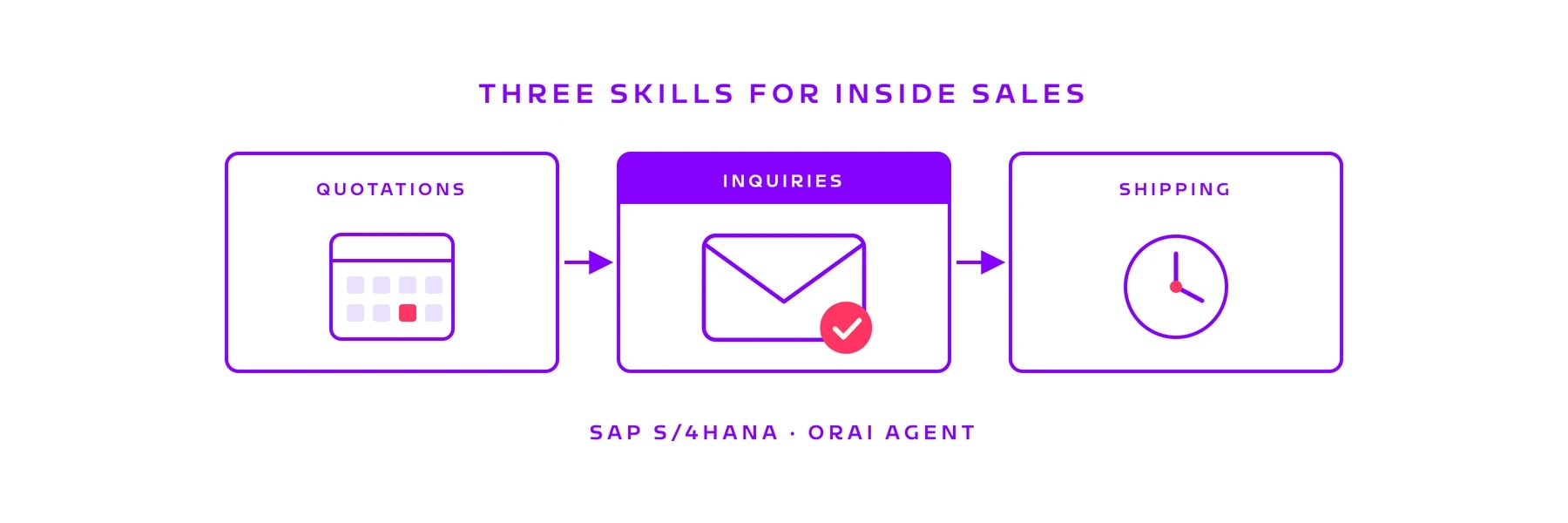
Three sales skills in the ORAI Agent: quotations, delivery inquiries, shipping backlog
Keeping an eye on expiring quotations, answering customers who ask about delivery dates, knowing the shipping backlog every morning: three inside sales tasks that are carried out every week. We built a skill for each and ran them against SAP S/4HANA.

A quotation worth 7,620 euros expires on Tuesday, and nobody has reminded the customer. A buyer emails to ask when her order will arrive, and inside sales clicks through the sales order, the delivery and the schedule lines. In the warehouse, three picked deliveries are waiting although their shipping date is today or already behind them.
These are not exceptions. We run into them in project after project with manufacturing companies. The information is all in SAP, but someone has to find it, put it together and turn it into an email.
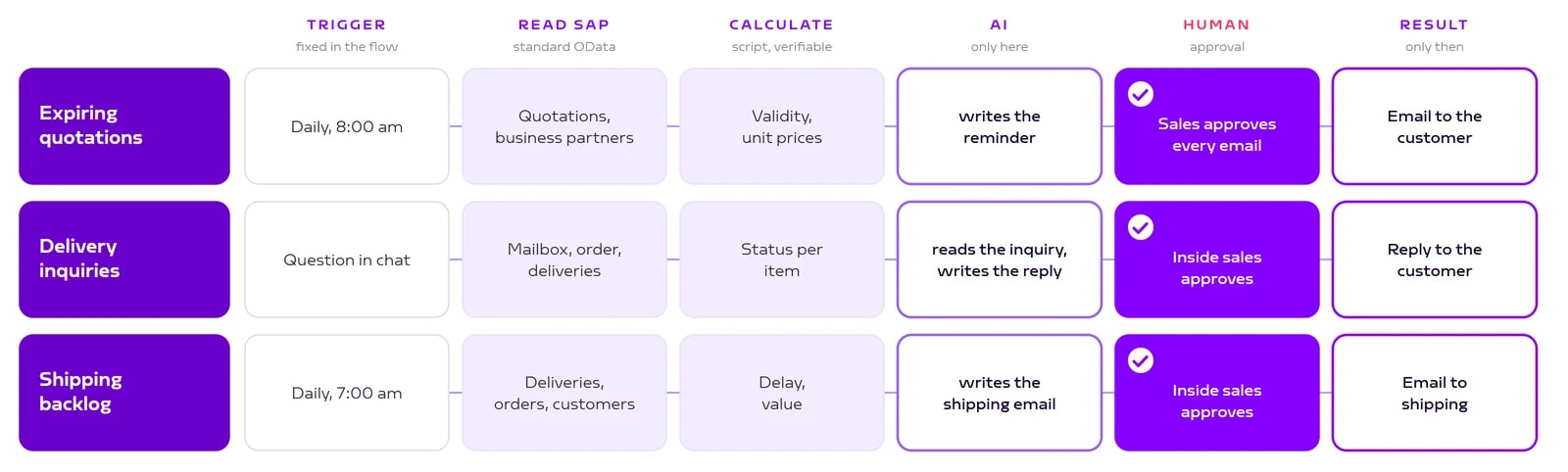
We built a skill for each of these tasks. Each one reads from SAP via standard OData, calculates in a script you can check, lets the AI work only where language is needed, and sends nothing until a person has approved it. A person built the skills in the ORAI Agent skill builder, in plain language: no programming and no workflow know-how. We tested them against an SAP S/4HANA demo system. The screenshots show real runs with sample data.
Skill 1: Remind customers of expiring quotations
Every morning at 8 am, the skill reads all open customer quotations whose validity ends within the next seven days. Rejected quotations and those already turned into an order are left out.
A script brings quotation and customer together. For each quotation, the skill reads name and email address from the business partner and calculates the unit price of each item from its net value. The result is one complete record per quotation.
The AI writes, sales decides. For each quotation, the AI drafts a short reminder with the quotation number, expiry date, items and total value. Every email lands in the sales inbox and only goes out after approval.
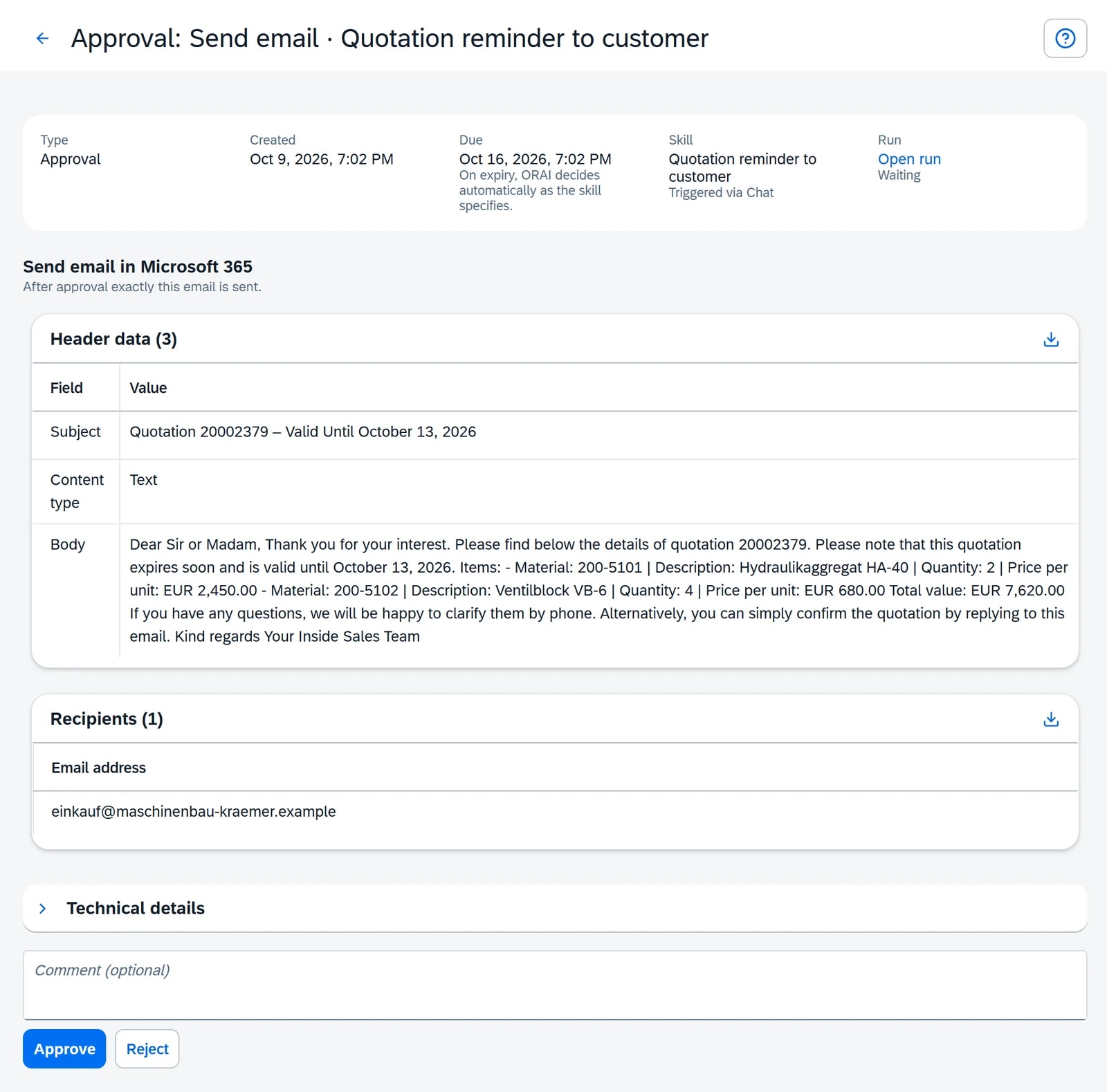
In the test run, the skill found exactly the two quotations expiring that week: 7,620 euros for Maschinenbau Krämer and 6,800 euros for Fördertechnik Lindner. A third quotation valid until November stayed untouched, as it should.
Skill 2: Answer delivery inquiries from customers
This skill runs on request. Inside sales asks the assistant in chat: "Is there a new delivery inquiry from a customer in my mailbox?"
The AI reads the mailbox, SAP provides the facts. The skill loads the emails of the last three days, recognizes the inquiry and extracts the customer's purchase order number. With it, the skill finds the sales order, the schedule lines with confirmed dates and the outbound deliveries with picking and shipping status.
A script classifies every item: shipped, ready for shipping, or open with a confirmed delivery date. Only then does the AI draft the reply, in the language of the customer's email.
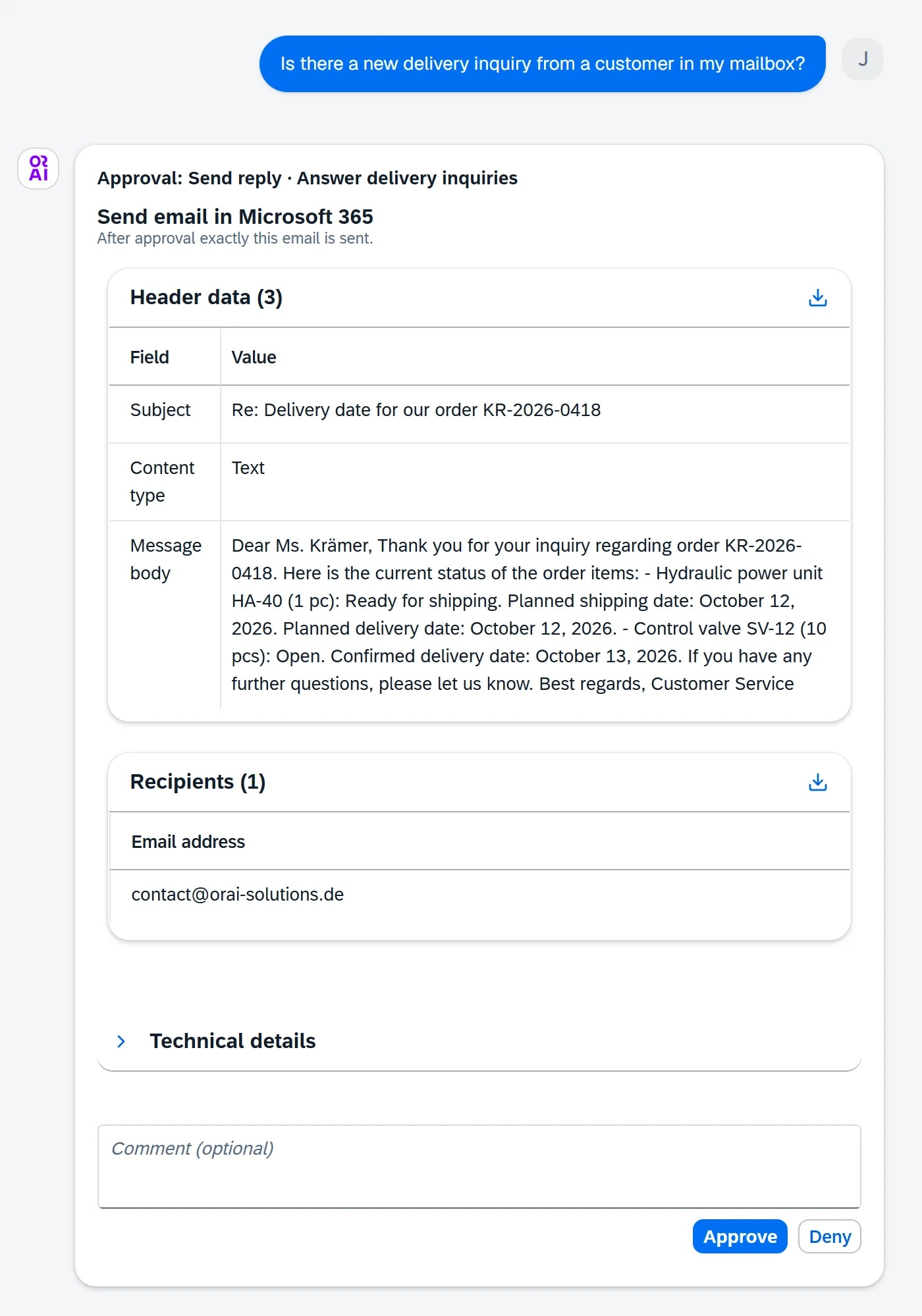
In the test, the buyer at Maschinenbau Krämer asked about her order. The reply covers both items with a date: the hydraulic power unit ships on October 12, the control valves are confirmed for October 13. Approval happens right in the chat.
Skill 3: Check the shipping backlog
Every morning at 7 am, the skill looks for all outbound deliveries of the last 30 days that are picked, whose planned goods issue date has been reached or passed, and that have not been posted yet.
The script calculates what is stuck in shipping. It adds customers, items and the value from the sales order items, calculates the days of delay and puts the oldest cases on top. From that, the AI drafts a short email to the shipping team.
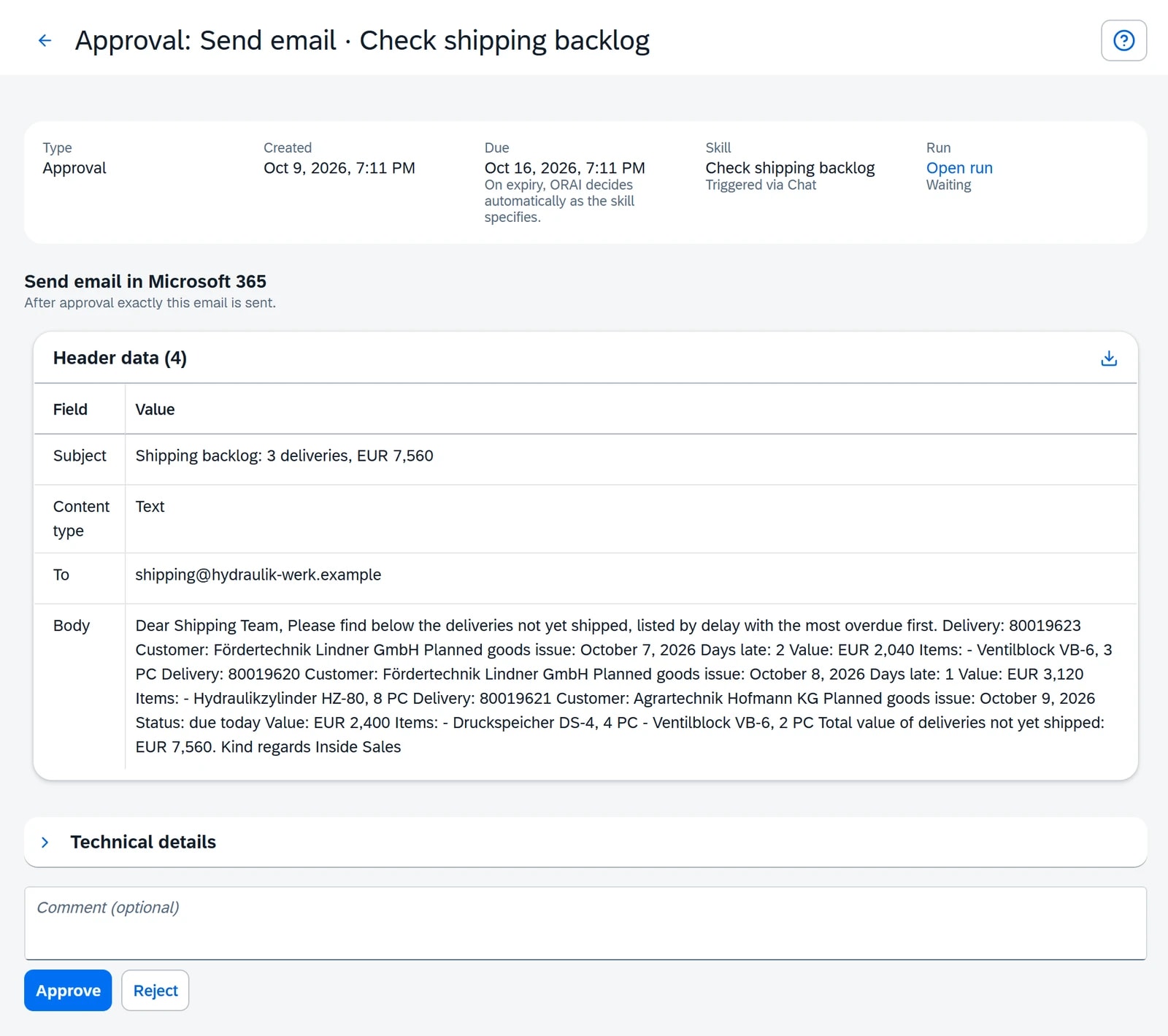
In the test run, three deliveries were in the backlog: two with one and two days of delay, one due today. Together 7,560 euros that should already be with the customer.
One order, three moments
Side by side, the three skills follow an order through inside sales. Before the order, a quotation is about to expire. During the order, the customer asks for the date. After picking, the goods stay in the warehouse.
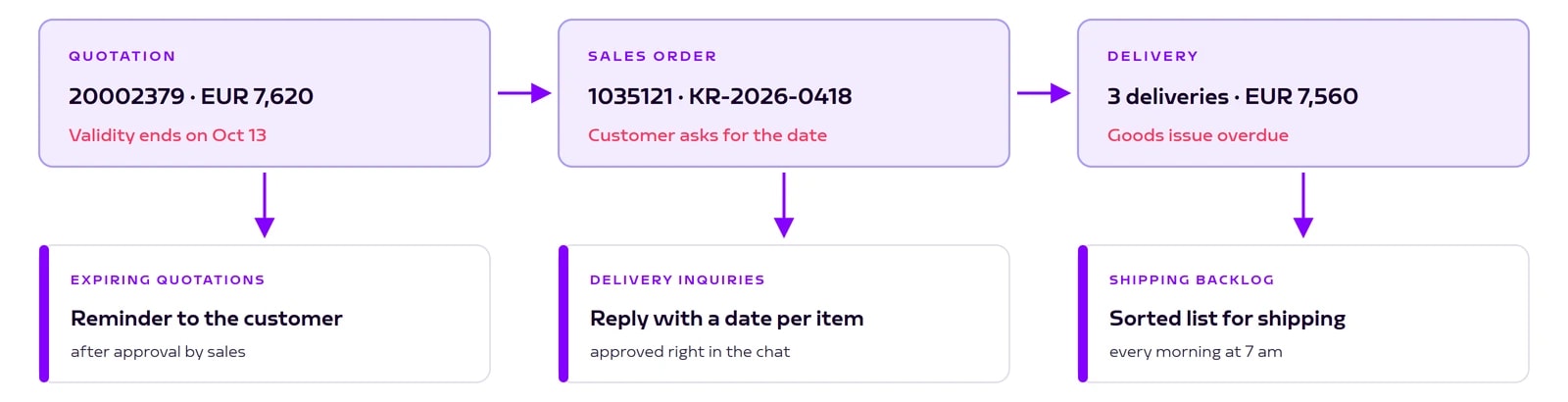
At each of these points, finding the right information otherwise takes time. And each one carries revenue: a quotation that expires without a reminder, a customer waiting for an answer, a delivery that does not go out.
How the skills were built
A person built the three skills, not a developer. Each skill started with one paragraph in the skill builder, the way you would explain the task to a new colleague. From that, the AI plans the steps, suggests a schedule and builds the flow.
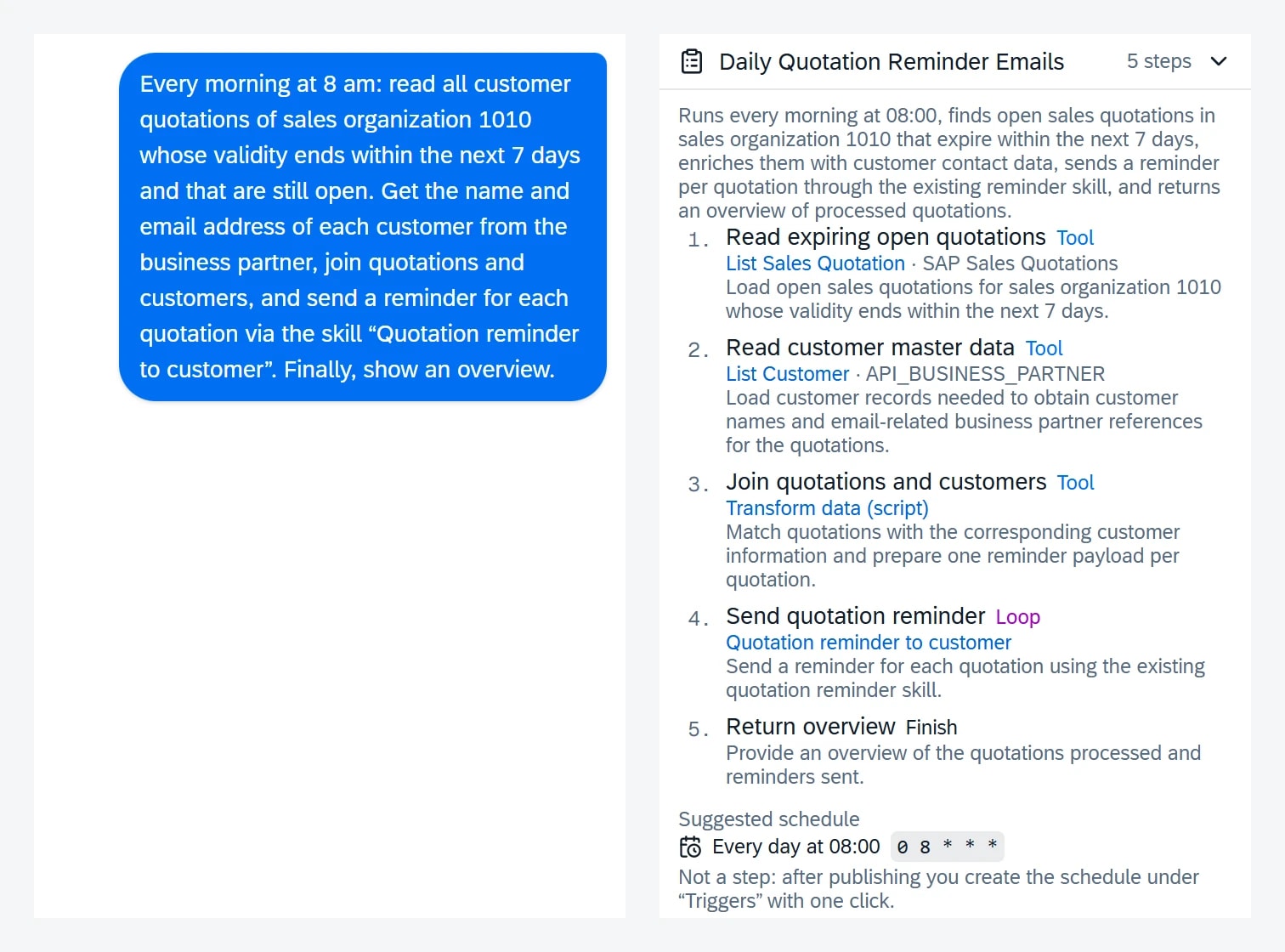
Then comes the test run with real data. After each step you see what it returned, and every email waits for confirmation. If something is missing, you write it in one sentence on the step, for example "the confirmed delivery date is missing", and the builder adapts the flow. Once a run looks the way it should, you save it as an example in the skill.
What SAP already offers
SAP has its own tools for all three topics. Quotations can be evaluated by validity in the quotation list. The Track Sales Orders (opens in a new tab) app shows the status of an order as a process flow. And for goods issue, there are worklists with all deliveries due for posting.
The skills start where the list in SAP ends and the work continues by email. Sales gets the finished reminder instead of a report, the customer an answer with a date instead of a callback, shipping a sorted list instead of a search. And no email goes out before someone has seen it.
Conclusion
None of the three skills replaces inside sales. They take away the searching: in quotation lists, in order and delivery, in shipping status. The decision stays with a person, but now it sits at a fixed point in the flow and can be traced afterwards.
If you want to start, take the question your inside sales team answers most often on the phone. That is your first skill.
Book a call
Build a sales skill on your SAP
In 30 minutes, we build a skill on one of your processes live and run it against your data in a test run.
- 30 minutes
- on your own process
- no obligation
Keep reading
Related articles
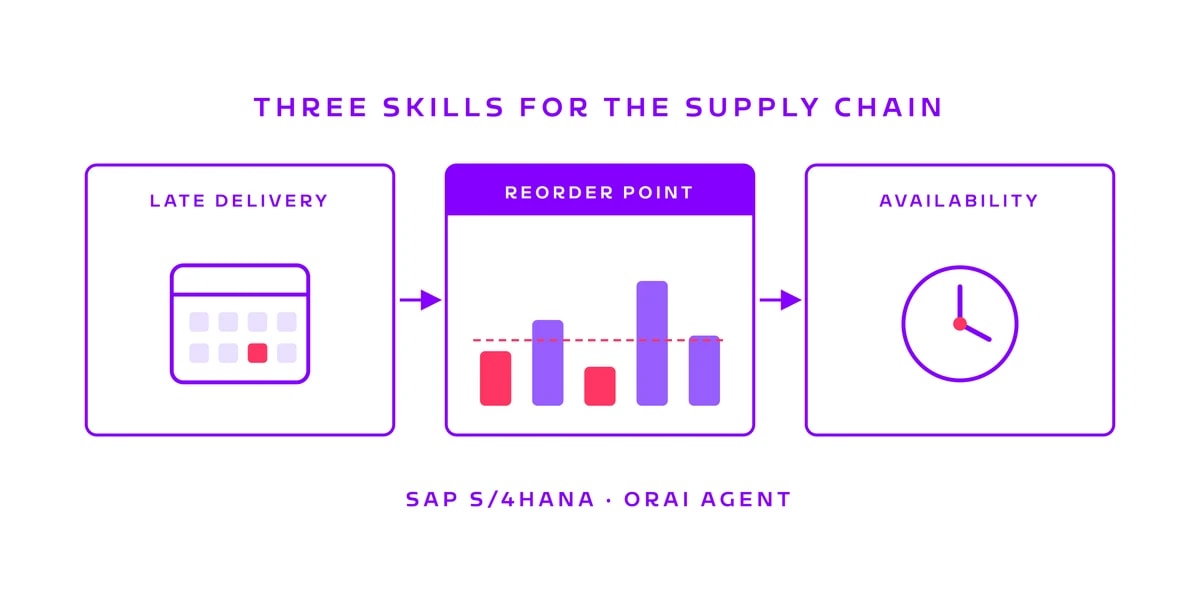
Three supply chain skills in the ORAI Agent: late deliveries, reorder points, material availability
Jan OstermannTopic: ORAI AgentChasing overdue purchase orders, checking reorder points, confirming material for a production order: three tasks that come back every week. We built a skill for each and ran them against a real SAP S/4HANA system.
100+ SAP functions in ORAI Agent: from sales quote to supplier invoice
Jan OstermannTopic: ORAI AgentThe ORAI Agent SAP catalog now covers 120 functions across 12 SAP standard APIs: order-to-cash and procure-to-pay end to end, plus material master, stock, and business partners. All via standard OData, no ABAP, with your users' real permissions. And the number keeps growing.
The Skill Builder in the ORAI Agent: complex work, the same right way every time
Jan OstermannTopic: ORAI AgentAsk an AI the same thing twice and get two different answers: that is where AI stalls in most companies. A Skill fixes the steps, the tools and the approvals up front and lets the AI work only where it is strong. And you build one in a single sitting.