100+ interfaces, on-time go-live: S/4HANA integration at an automotive supplier
More than 100 interfaces, three plants, live JIT supply: an automotive supplier was moving to SAP S/4HANA. The risk was not the ERP but the point-to-point integration that had grown over years. We helped turn it into one central layer on CPI. The go-live landed on schedule.

More than 100 interfaces. Three plants. OEMs supplied just in time while the ERP underneath gets replaced. What breaks first?
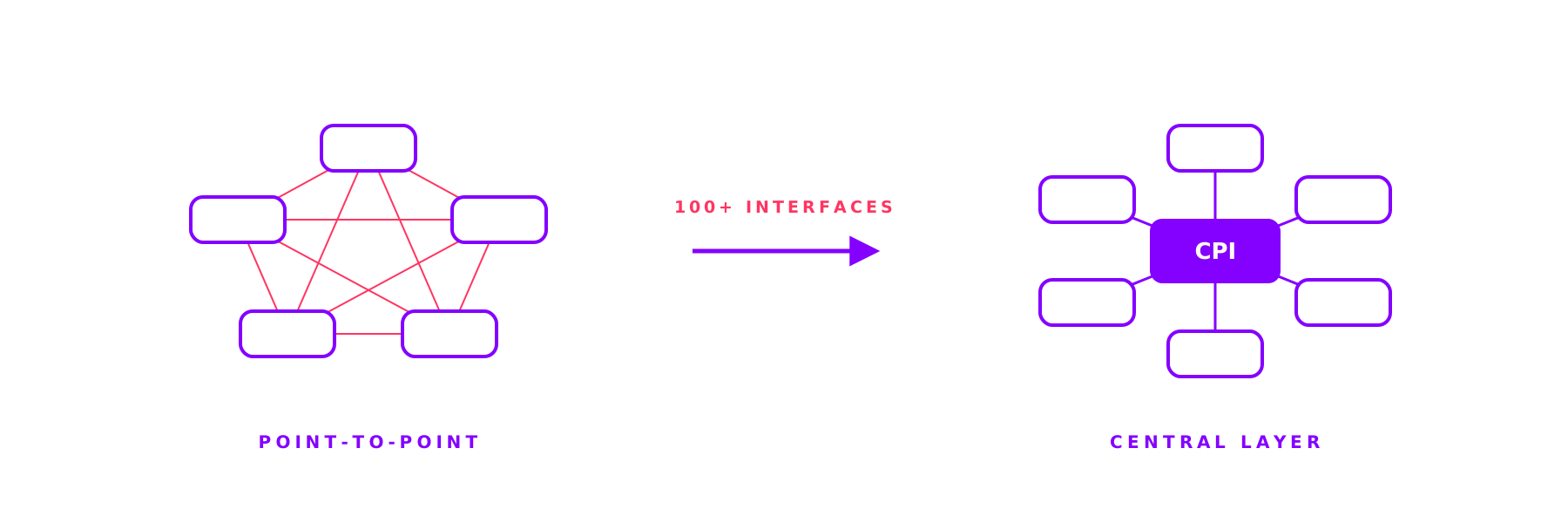
That was the question facing an automotive supplier on its way to SAP S/4HANA. The risk was not the ERP itself but the integration: grown over years, point-to-point, barely documented. We joined the project team to help turn that tangle into a central integration layer on the SAP Integration Suite (CPI). The go-live landed on schedule.
The starting point: every system wired directly to every other
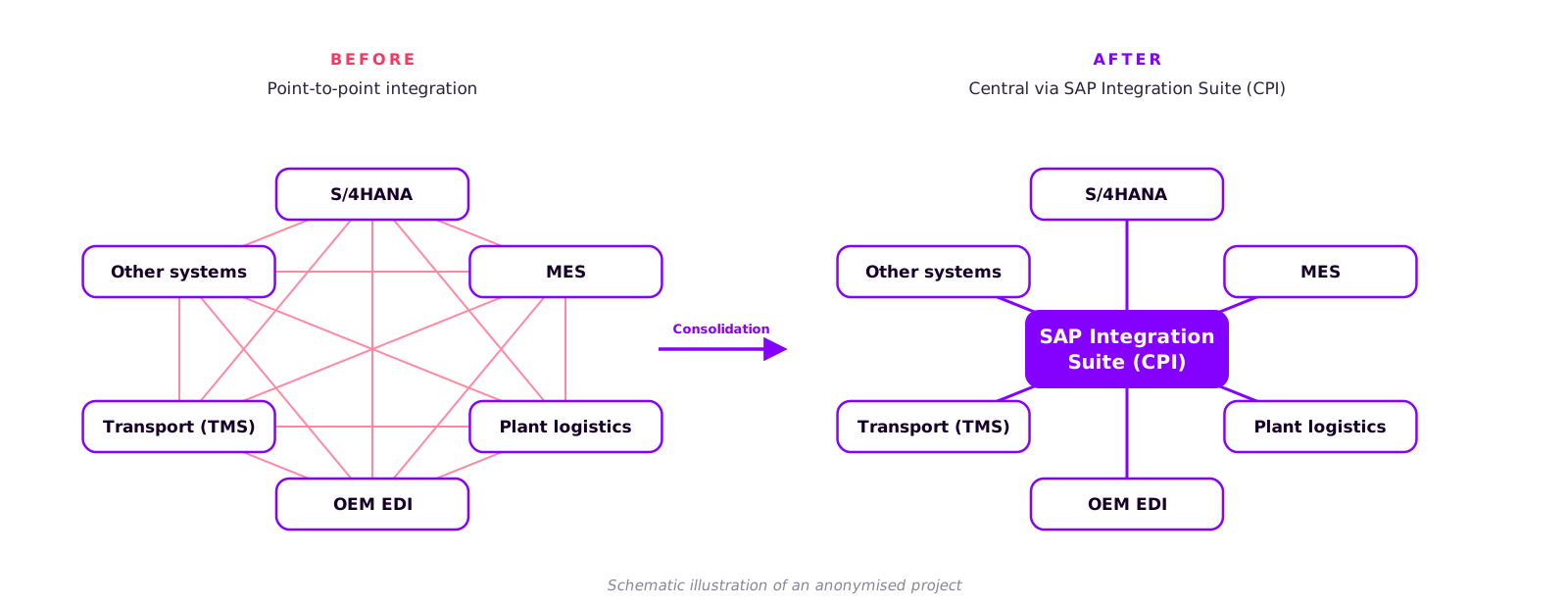
Over the years, the integration had grown one connection at a time: point-to-point, every system wired straight to the next. By the end there were more than 100 interfaces between S/4HANA, MES, warehouse and transport systems, the OEM EDI connection and over 20 further applications, spread across three plants.
Lifting that grown wiring onto S/4HANA without disrupting just-in-time supply was the real task. And it did not run in isolation: several implementation partners and internal IT worked on the same system in parallel.
100+
Interfaces consolidated onto one central layer
3
Plants migrated without disrupting JIT supply
8
Months from target architecture to on-time go-live
The solution: one central layer instead of point-to-point
We came in to reinforce the integration workstream, focused on the interface architecture. The plan was simple: away from direct wiring, toward one layer that everything runs through.
We built that layer on the SAP Integration Suite (CPI). Instead of dozens of direct connections there is now a manageable set of standardised, versioned interfaces with clear contracts. Extensions sit next to the core as side-by-side extensions, not inside it. That is the Clean Core idea, and it keeps the S/4HANA system upgradable.
How the integration workstream ran
The work ran as its own stream over roughly eight months, from target architecture to go-live.
- Target architecture
Mapping the grown connections, one clear target picture and a prioritised list of every interface.
- Standards & governance
Fixed patterns for CPI, plus naming, versioning and extension rules every team follows.
- Build & implementation
Building and testing the interfaces on CPI, together with the other vendors on the project.
- Cutover & hypercare
Planning the switchover, arming the monitoring and handing operations cleanly to the internal team.
The result: live on time, and finally clear
The go-live happened on schedule. The web of direct connections gave way to a central layer where every interface is visible, monitored and versioned in one place.
The biggest difference shows up in everyday operations afterwards. When an interface gets stuck, you see it in the monitoring straight away, instead of searching through dozens of connections. When an OEM changes its EDI format, you adjust it in one place. And the S/4HANA system stays clean and upgradable.
That this step pays off beyond a single project is shown by a Forrester study (opens in a new tab) commissioned by SAP: companies achieved a 345 percent ROI over three years with SAP Integration Suite, and integration developer efficiency rose by 30 percent.
Why integration was the real risk
At a supplier, the customers' production depends on reliable delivery. Delivery schedules, cumulative quantities and just-in-time sequences have to flow reliably between OEM, ERP, MES and warehouse logistics. If the wrong interface breaks, in the worst case a line stops at the customer.
That is why standardisation was not an end in itself. Clean, versioned interfaces and central monitoring are what make a cutover across more than 100 connections plannable instead of a gamble.
An honest look: who needs a central integration layer?
Not every landscape needs this step. Four questions show whether it pays off.
How many interfaces are there, really? The more systems hang together through the more connections, the bigger the gain in clarity and reuse.
How many plants or tenants are involved? As soon as the same interface exists more than once, standardisation pays off twice.
How often do external formats change? If OEM EDI changes regularly, you want to adjust it in one place, not twenty.
Is Clean Core on the agenda? Staying upgradable takes extensions next to the core, not inside it.
If you only have a handful of stable connections that rarely change, a central layer can be a sledgehammer to crack a nut. An honest look at interface count, rate of change and plant structure usually settles the decision.
How we work at ORAI
We know both sides: SAP in depth, and the integration world of manufacturing. S/4HANA, MES and logistics connectivity, OEM EDI, the SAP BTP. You can find an overview of our services under SAP Consulting, and another project in our reference on material master creation at a machinery manufacturer. And on every project, a founder sits at the table, not a pyramid of juniors.
Contact
Planning an S/4HANA move and want the integration to hold?
Tell us briefly about your system landscape and your timeline. We will tell you where the risks sit across 100+ interfaces and how to make the cutover plannable.
- no obligation
- no sales pressure
Keep reading
More on Client Projects
Scan instead of paper: mobile warehouse processes with SAP Build Apps
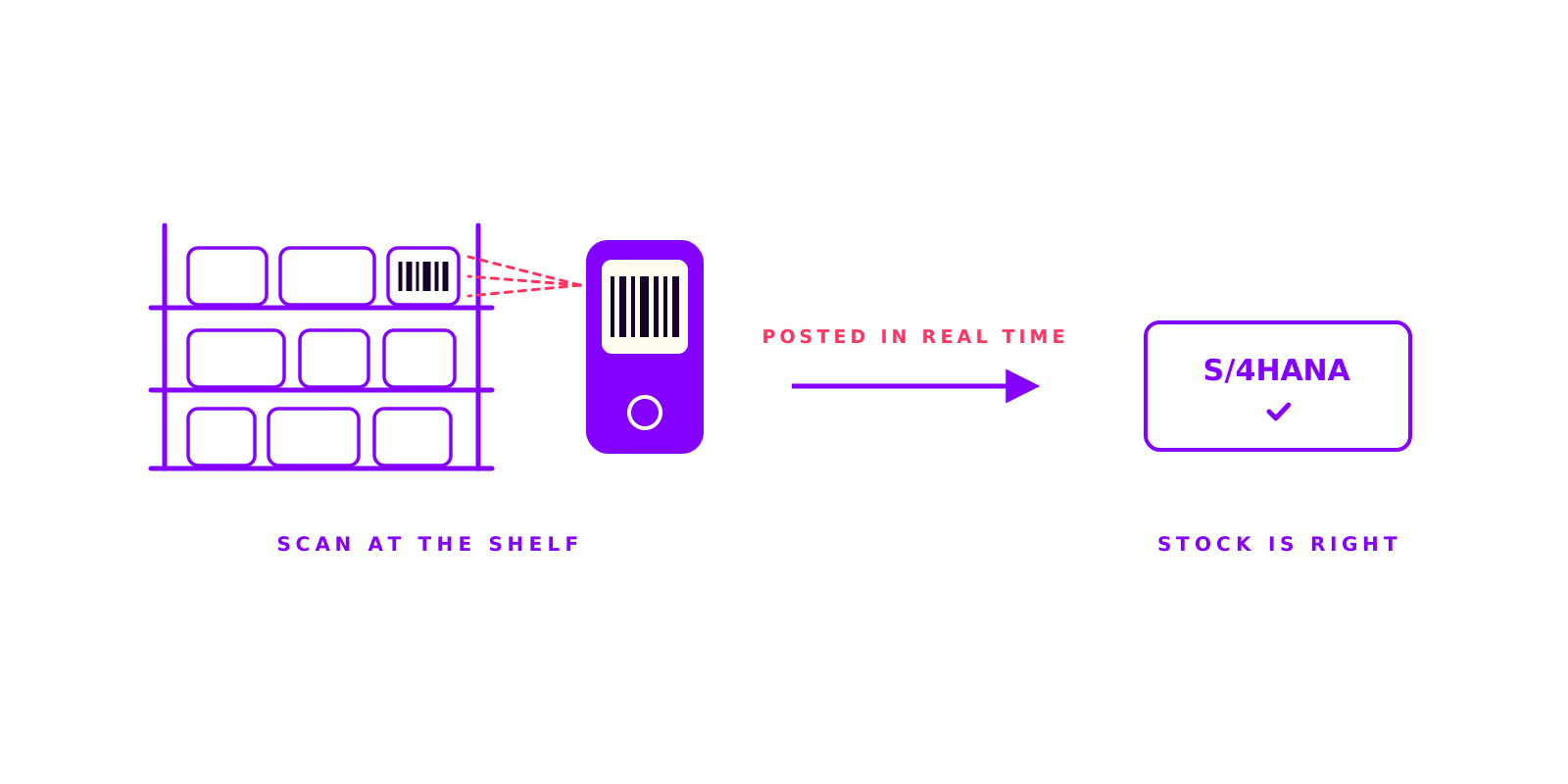
Where do you post stock movements: at the shelf or later at a desk? In one warehouse, movements were noted on paper and keyed in later. We built mobile apps with SAP Build Apps that handle goods receipt, transfers, stock counts and shipping right on the handheld. With barcode scanning, offline capable and booked straight into S/4HANA.

Product Knowledge in Seconds: How a Machinery Manufacturer Transformed Sales and Service
A mid-sized industrial machinery manufacturer wanted to give their sales and service teams faster access to product information. With the ORAI Agent and a simple SharePoint connection, the solution was live in just 3 weeks.
One request instead of email chaos: material master creation at a machinery manufacturer
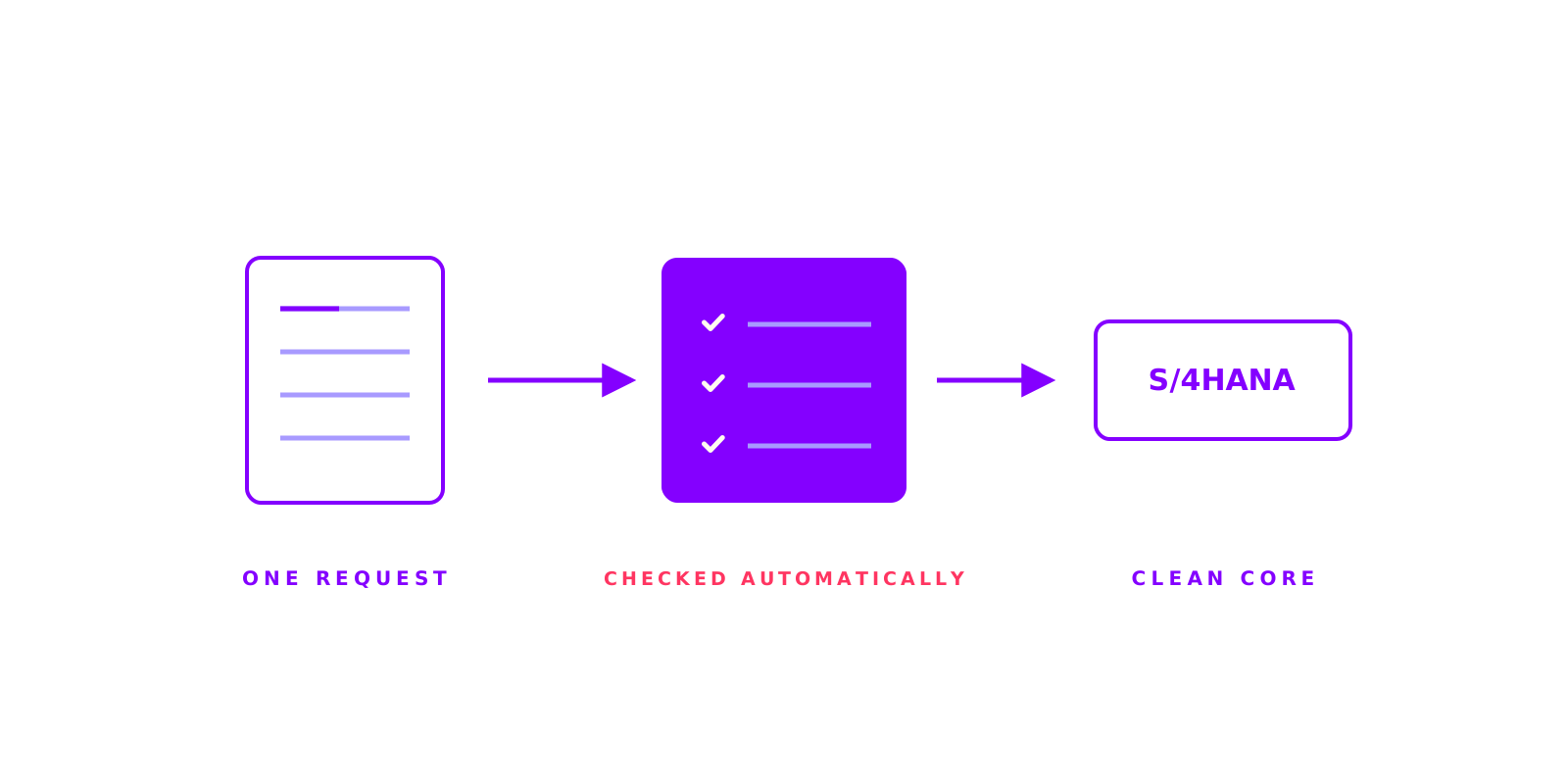
How long does a new material master take at your company? At a machinery and plant manufacturer, creation ran over emails, Excel and word of mouth, across five departments. We turned that into one workflow on SAP Build Process Automation: a single request, automatic checks including duplicate detection, clear approvals, creation via standard OData.