One request instead of email chaos: material master creation at a machinery manufacturer
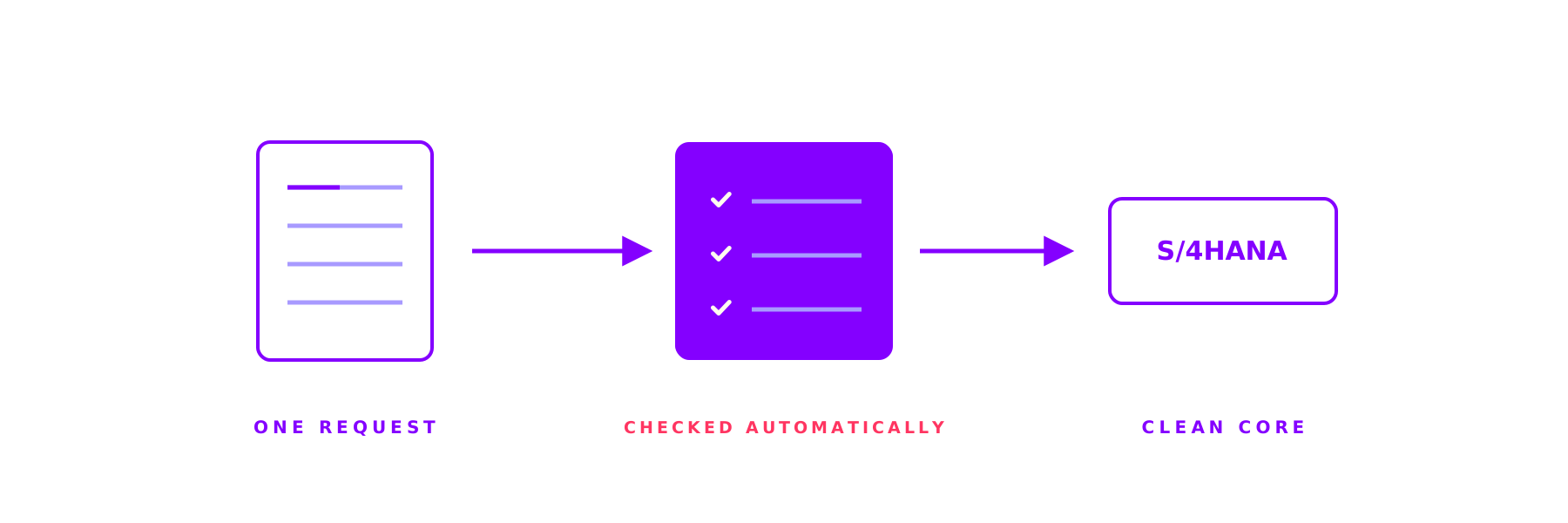
How long does a new material master take at your company? At a machinery and plant manufacturer, creation ran over emails, Excel and word of mouth, across five departments. We turned that into one workflow on SAP Build Process Automation: a single request, automatic checks including duplicate detection, clear approvals, creation via standard OData.

How long does it take to create a new material master at your company? And how many emails, Excel lists and follow-up questions does it take until every view is maintained?
At a machinery and plant manufacturer, the honest answer was: too long and too many. So we rebuilt material master creation from scratch, as one continuous workflow on SAP Build Process Automation. A single request, automatic checks including duplicate detection, clear approvals, and creation via standard OData, without custom code in the core.
The starting point: one material master, five departments, no process
A complete material master in SAP S/4HANA has, depending on the material type, more than 100 mandatory fields spread across more than a dozen views: basic data, planning, accounting, sales, plant and storage data. These fields belong organisationally in different hands, from master-data maintenance through planning and controlling to sales and purchasing.
Here, creation ran over emails, Excel lists and word of mouth. No common trigger, no consistent check. Whether a material already existed, and whether plant, valuation and unit of measure fit together, lived in the head of the master-data owner. When several plants created materials independently, duplicates appeared, with all the knock-on effects for planning, reporting and consolidation. The result: long lead times, a lot of back-and-forth, and data quality that got worse as volume grew.
1
Standardised entry point instead of email, Excel and word of mouth
100+
Mandatory fields per material, checked automatically
0
Z-code in the core, creation via standard OData
The solution: one request, one process, one system
We set up the whole process from scratch, from concept through build to rollout. In place of email and Excel came a single, standardised entry point: a digital request form, or alternatively an Excel upload.
Behind it runs an end-to-end workflow on SAP Build Process Automation. Every request is checked automatically, for mandatory fields per material type, for duplicates, and for the consistency of plant, valuation and unit of measure. It then goes into a multi-step approval with clear roles and segregation of duties. Only after approval does the workflow create the material in S/4HANA, via the standard OData API and therefore without custom code in the core. Every step is documented, and clarification cases land with all the context directly with the right person.
That processes like this come together quickly on SAP Build matches IDC figures (opens in a new tab) cited by SAP: extensions are delivered on average 41 percent faster than with classic development.

How we approached it
From process discovery to productive rollout.
- Process discovery
Which material types, views and mandatory fields? Who approves what?
- Build
Form, validations, approval logic and the OData connection on SAP BTP.
- Test & integration
Against the Q-system, together with the key users.
- Go-live & enablement
Pilot, key-user training and a clean handover to operations.
The result: faster, cleaner, traceable
A days-long back-and-forth became a guided process. Requests arrive complete and pre-checked, duplicates are caught before the material is created, and every step is traceable, from request through approval to creation.
For the departments that means less manual work and fewer queries. For the master data, quality goes up because the checks always run the same way and in full. And because creation happens via the standard API, the S/4HANA system stays Clean-Core-compliant and upgradable.
Why material creation is so often underestimated
The process sounds simple: create the material, maintain the views, approve. In reality it spreads across 100+ mandatory fields, a dozen views and five departments, with no common trigger. Every media break over email, Excel or word of mouth is a source of error, and every duplicate works its way through planning, reporting and later consolidation. How much time that adds up to is something we calculated in our article on material creation in SAP S/4HANA: in many landscapes, around 1,000 hours a year disappear there.
That is exactly why standardisation pays off quickly here. A defined entry point, automatic checks and clear responsibilities take the effort out before it arises. Not as an end in itself, but as the difference between clean master data and a permanent problem.
An honest look: when is a material-master workflow worth it?
Not every material creation needs the same machinery. Four questions show whether the workflow pays off.
How many materials do you create per month? The higher the volume, the faster the process pays for itself.
How many plants and departments are involved? The more people involved, the more valuable clear roles and segregation of duties become.
How often do duplicates appear? Where data quality is a real problem, the automatic check works from day one.
Should creation run Clean-Core-compliant? Standard OData instead of custom code keeps the system upgradable.
For a handful of creations per month with only a few people involved, a leaner approach is often enough. An honest look at creation volume, the people involved and the error rate quickly shows the direction.
How we work at ORAI
We know the material master from practice: the views, the quirks of the OData APIs and the order in which fields have to be maintained. We combine deep SAP knowledge with BTP and Build Process Automation expertise, and we build processes that stay Clean-Core-compliant. You can find an overview of our services under SAP Consulting, and another project in our reference on S/4HANA integration at an automotive supplier. On every project, a founder sits at the table, not a pyramid of juniors.
Contact
Losing time in material creation and fighting duplicates?
Tell us briefly how creation runs at your company today and at what volume. We will tell you whether a workflow pays off and where it should start.
- no obligation
- no sales pressure
Keep reading
More on Client Projects
Scan instead of paper: mobile warehouse processes with SAP Build Apps
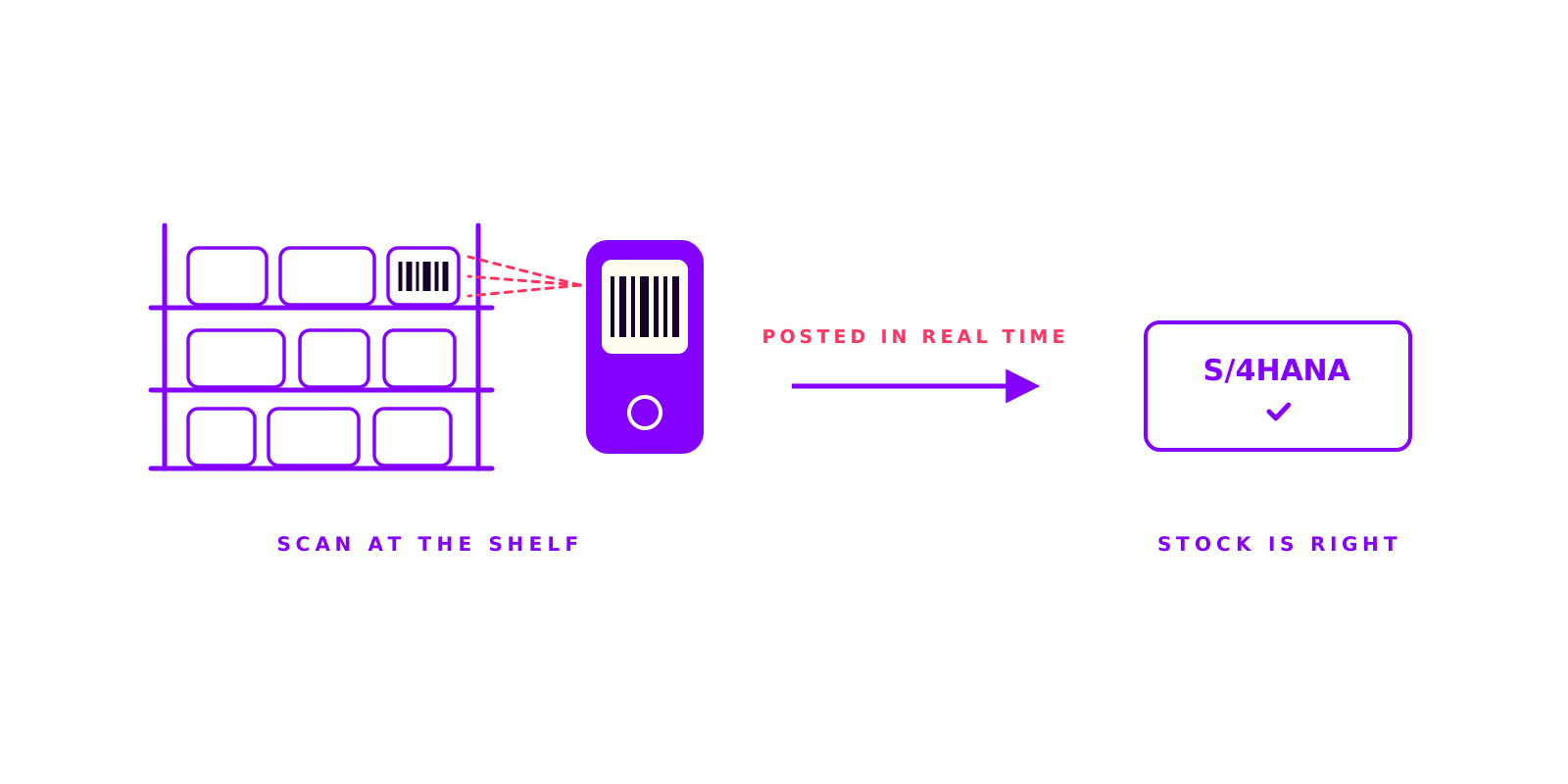
Where do you post stock movements: at the shelf or later at a desk? In one warehouse, movements were noted on paper and keyed in later. We built mobile apps with SAP Build Apps that handle goods receipt, transfers, stock counts and shipping right on the handheld. With barcode scanning, offline capable and booked straight into S/4HANA.
100+ interfaces, on-time go-live: S/4HANA integration at an automotive supplier
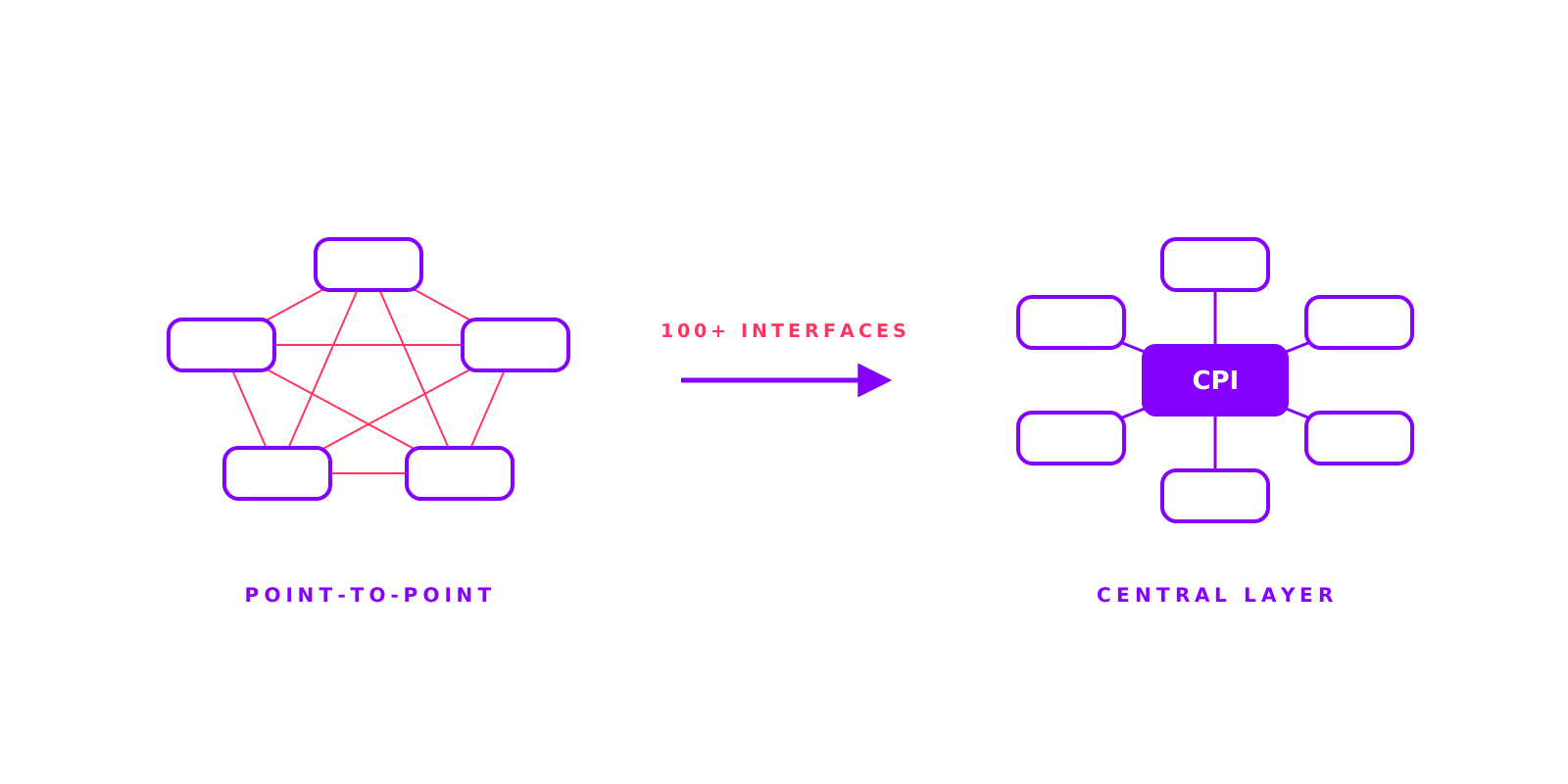
More than 100 interfaces, three plants, live JIT supply: an automotive supplier was moving to SAP S/4HANA. The risk was not the ERP but the point-to-point integration that had grown over years. We helped turn it into one central layer on CPI. The go-live landed on schedule.

Product Knowledge in Seconds: How a Machinery Manufacturer Transformed Sales and Service
A mid-sized industrial machinery manufacturer wanted to give their sales and service teams faster access to product information. With the ORAI Agent and a simple SharePoint connection, the solution was live in just 3 weeks.